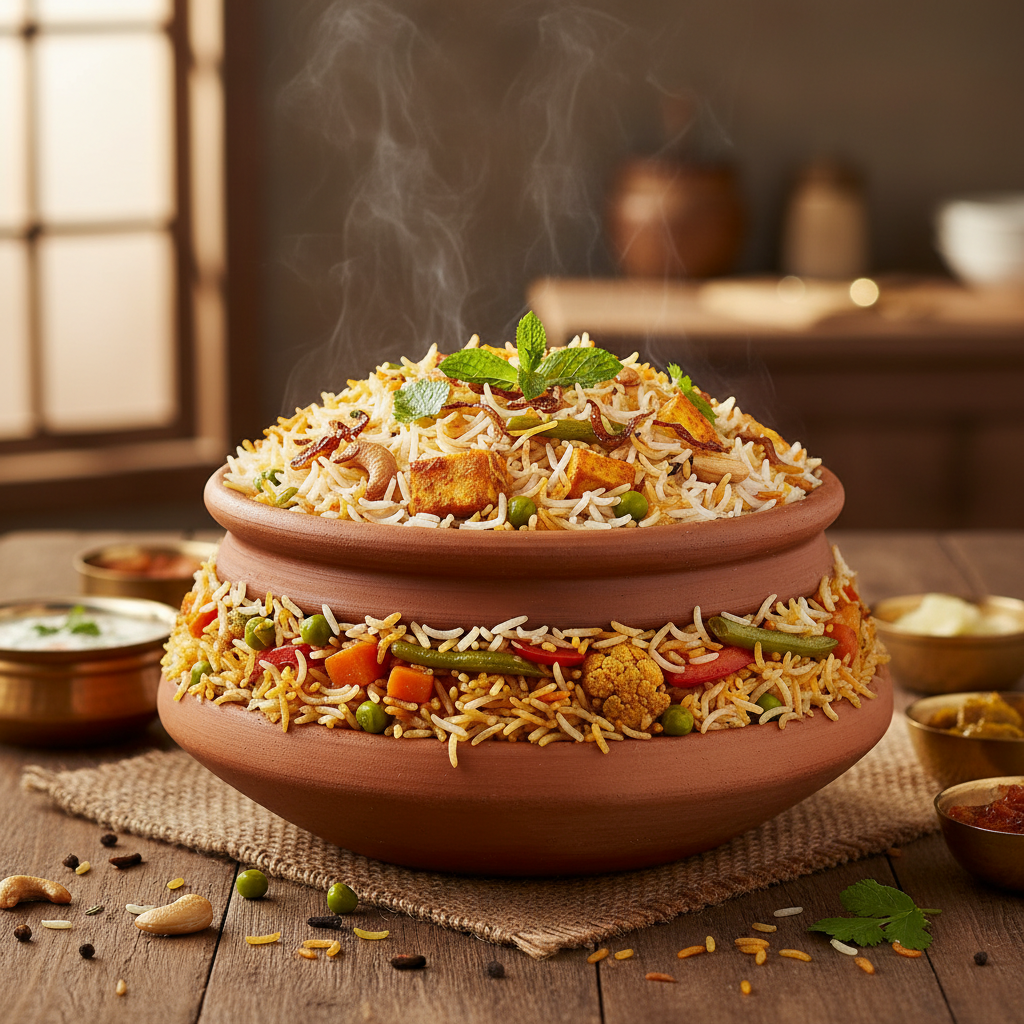

Whole spice · No powder · No shortcut
Mace, stone flower,
and a vendor in
Khari Baoli since 1971.
Javitri and pathar phool arrive weekly, whole. They are dry-roasted in a flat pan at dawn, before the kitchen heats, so nothing competes with what the spice is trying to say.
"If you grind it before the order, the oil is already gone."
— Raza Bhai, spice vendor, Khari Baoli
The Method
Four steps. No shortcuts.
This is not a recipe. This is a discipline practiced every service, in the same order, without variation.
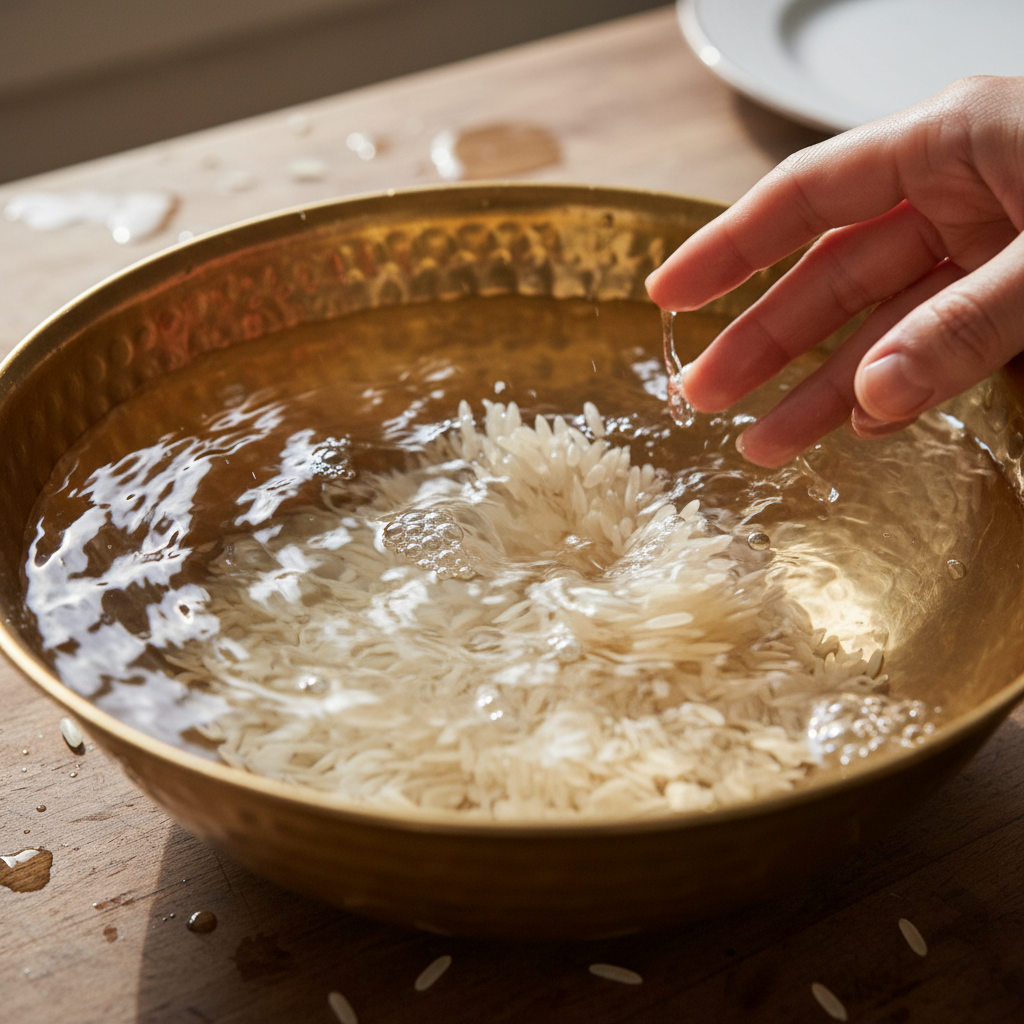
Forty-seven minutes. Not forty-five.
Basmati is soaked in cold water for exactly forty-seven minutes. The grain needs to lengthen before it meets heat — any shorter and it breaks under steam; any longer and it loses the bite that tells you it was worth the wait.
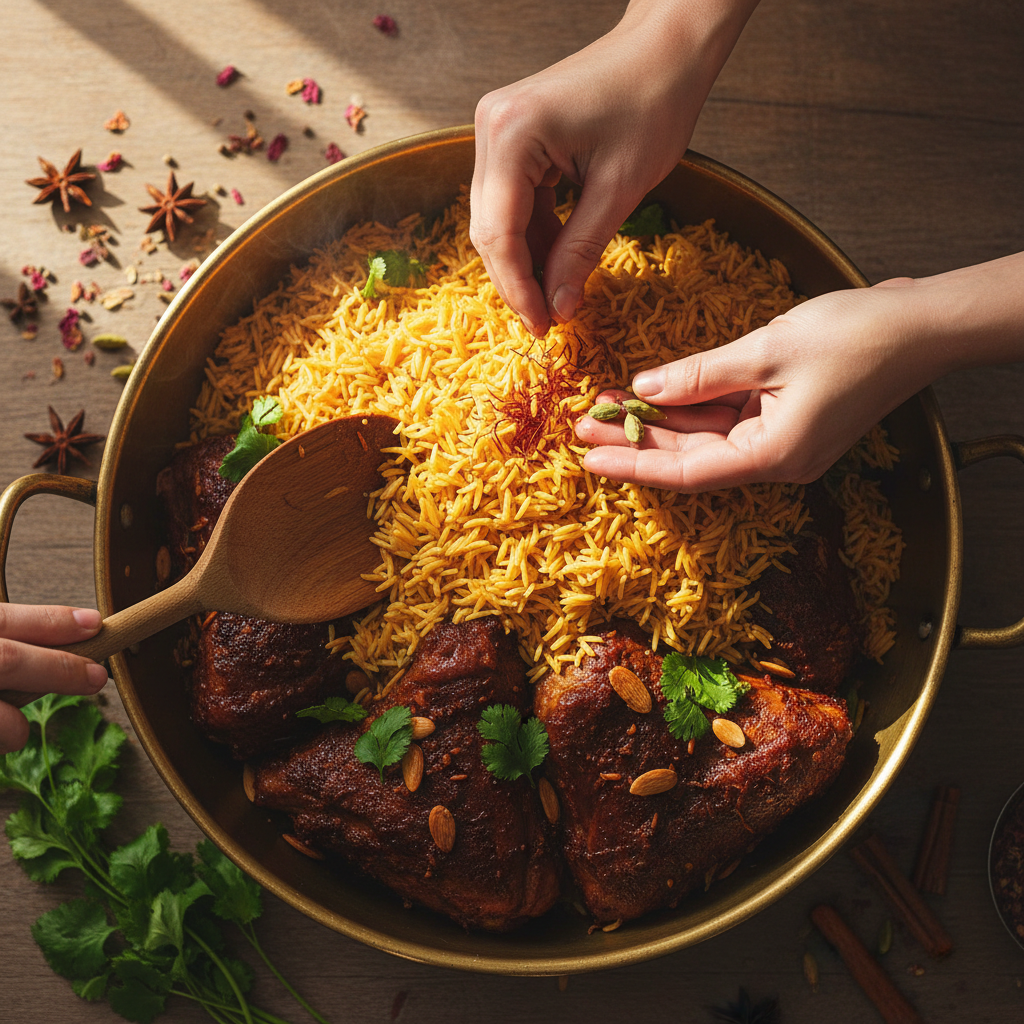
Meat first. Then rice. Then saffron milk.
Marinated meat — never pre-cooked — goes in cold. Rice is drained and laid over in a single motion. Saffron steeped in warm milk is poured in thin lines across the surface, so the color distributes unevenly, the way it should.
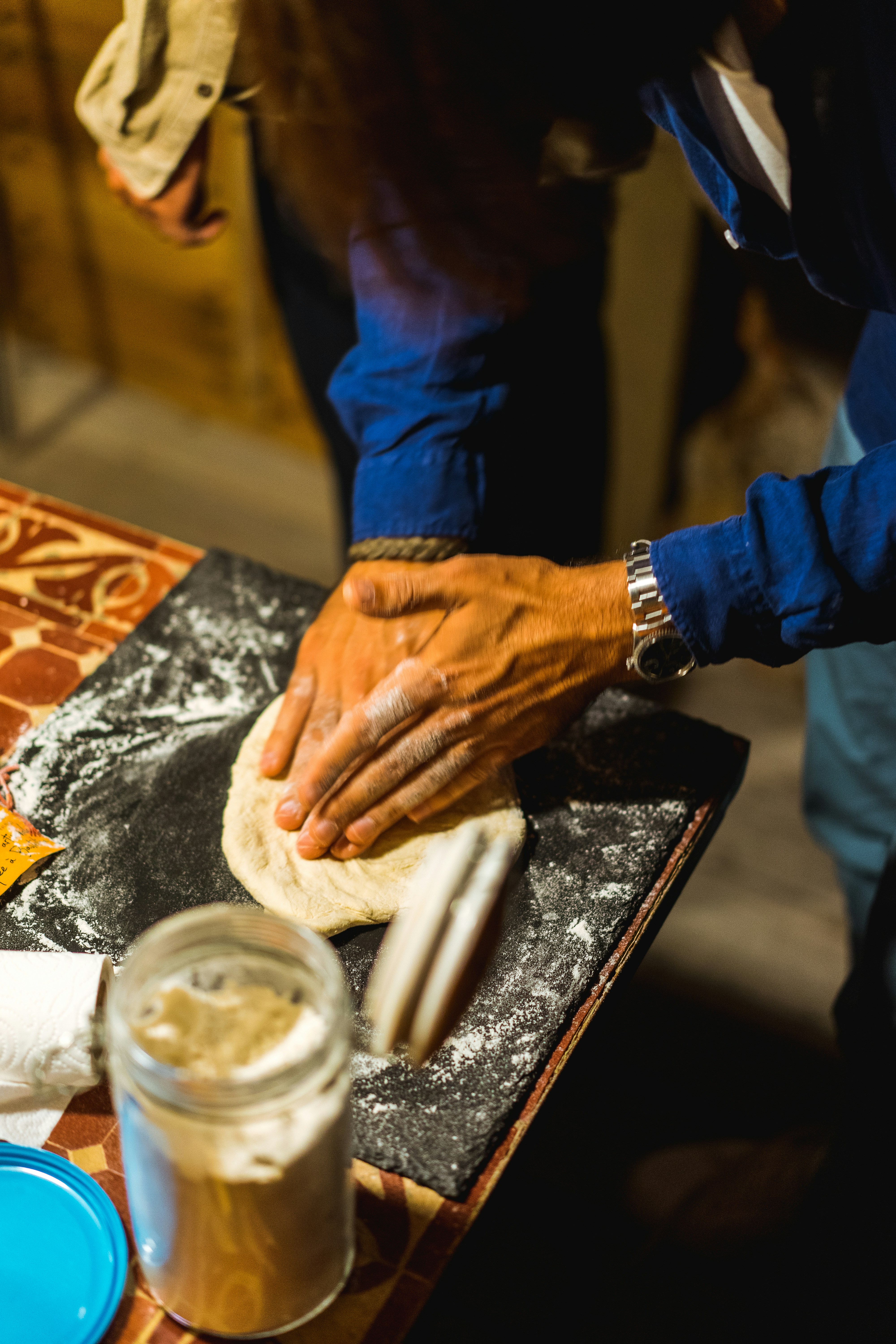
Dough pressed by hand around the rim.
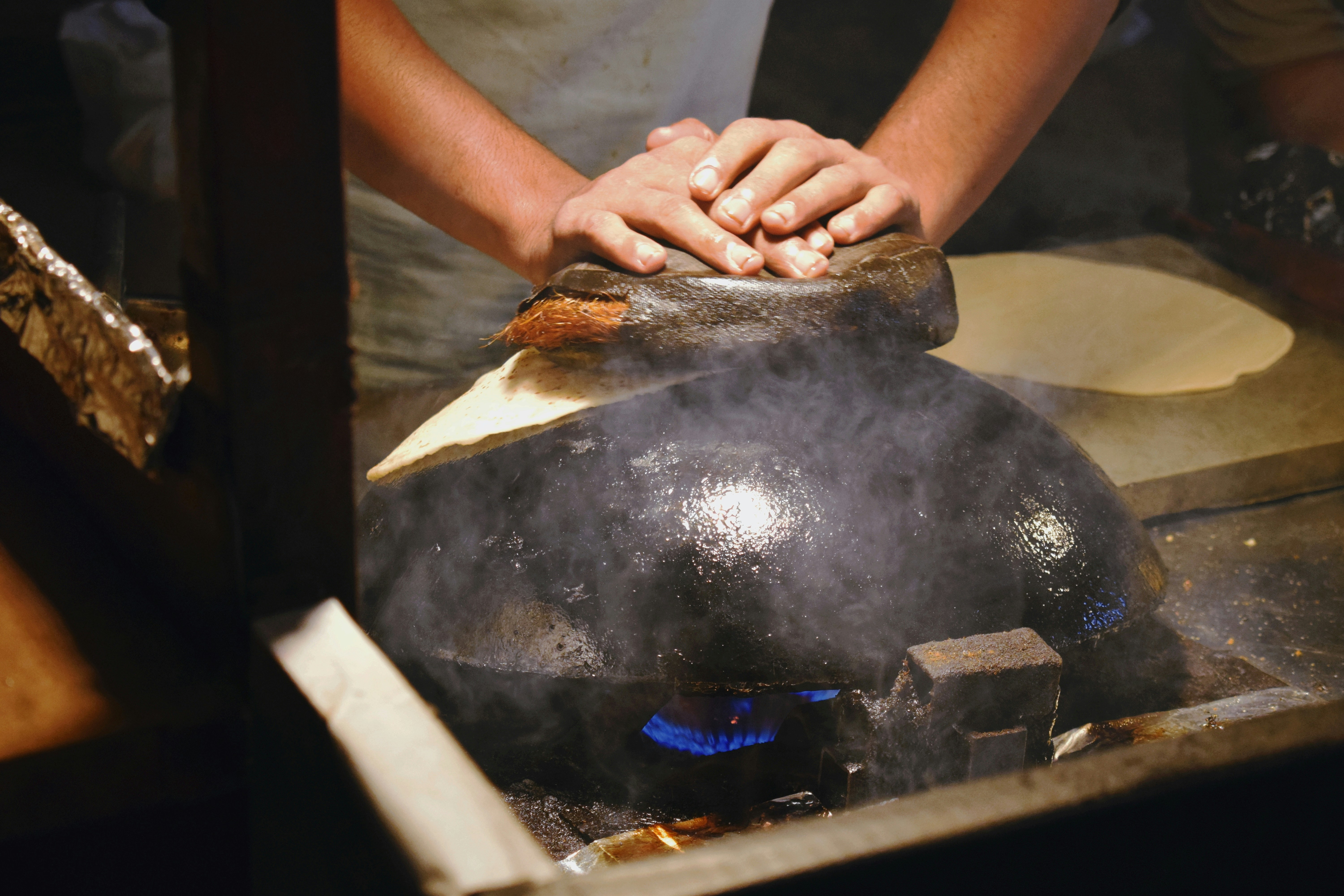
A rope of wheat dough is pressed along the entire circumference of the handi rim, then the lid is set and pressed down. The seal traps every molecule of steam inside. When it cracks open at your table, that is the first breath of air the biryani has taken.
Low coal. No rushing. Forty minutes minimum.
The sealed handi sits over a bed of slow coal — never direct flame, never a gas ring turned high. The dum process requires patience that cannot be faked. The internal pressure builds, the meat cooks in its own juice, and the rice absorbs everything below it.
People who can tell the difference.
I've eaten kacchi at six places in this city. DumHandi is the only one where the meat and rice actually finish cooking at the same moment. That synchrony is the whole point.

Arjun Mehta
Food writer, Mumbai
The dough seal cracking at the table is theater, but it's earned theater. You can smell the difference between dum and a pot with a tight lid. This is dum.

Priya Krishnaswamy
Chef, Bengaluru
Our office has had the 'best biryani' argument for three years. We settled it with a shared handi from DumHandi. The argument is over.

Sameer Qureshi
Product manager, Hyderabad
You are not choosing
whether to eat biryani.
You are choosing whether you can wait any longer.
Signature handi · Pre-selected · Delivered sealed
47 min
Soak time, exact
40 min
Minimum dum
One handi
One price, no add-ons